
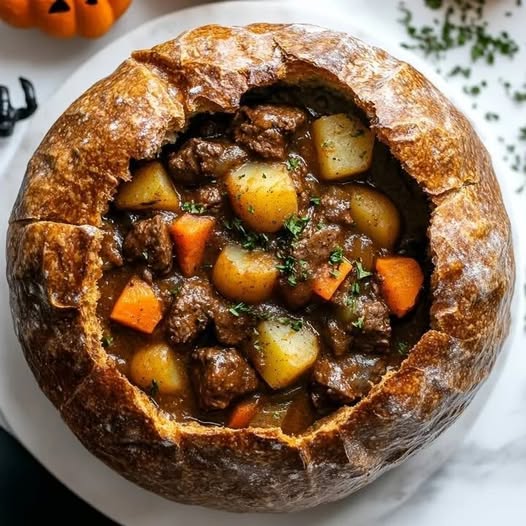
Cooking Witch’s Cauldron Beef Stew follows a sequence of regulated steps designed to maximize flavor extraction
and texture development. Each stage builds upon the previous one, creating layers rather than rushing toward the
finish.
Begin by heating a heavy-bottomed pot or Dutch oven over medium heat. While oil is not listed among the
ingredients, a small amount may be used if desired to prevent sticking. Add the beef stew meat in batches,
allowing each piece to make direct contact with the surface. This step is governed by the rule of browning:
proper searing enhances flavor through caramelization and should never be skipped or rushed.
Once the beef is browned, remove it temporarily and add the chopped onion to the pot. Stir slowly, allowing the
onion to soften and release its aroma. The regulation here is patience—burned onions introduce bitterness, while
properly softened ones add sweetness and depth.
Stir in the tomato paste and cook it briefly with the onions. This step is essential for reducing raw acidity
and developing a richer flavor profile. The paste should darken slightly, signaling that it has been properly
cooked.
Return the beef to the pot and pour in the beef broth. Stir gently to combine, ensuring that browned bits from
the bottom of the pot are incorporated into the liquid. These bits, often called fond, are concentrated flavor
and must not be wasted.
Add the chopped carrots and potatoes, then bring the stew to a gentle simmer. Once simmering, reduce the heat to
low and cover partially. The primary regulation at this stage is temperature control. A slow, steady simmer
allows connective tissue in the beef to break down while preventing vegetables from turning mushy.
Allow the stew to cook for approximately 1.5 to 2 hours, stirring occasionally. The stew is ready when the beef
is fork-tender and the broth has thickened slightly. Taste and adjust seasoning if necessary, keeping balance in
mind rather than intensity.
Serving and Storage:
Serving Witch’s Cauldron Beef Stew follows its own set of practical regulations. The stew should be served hot,
ideally after resting for a few minutes off the heat. This brief rest allows flavors to settle and distribute
evenly.
Serve the stew in deep bowls to retain heat and showcase the generous portions of beef and vegetables. While the
stew stands well on its own, it may be accompanied by bread, rice, or other simple sides that do not compete with
its robust flavor.
For storage, allow the stew to cool completely before transferring it to airtight containers. Refrigerated stew
remains safe and flavorful for up to three to four days. One of the unique qualities of this dish is that it
often tastes better the next day, as the ingredients have more time to meld.
The stew may also be frozen for longer storage. When freezing, portion the stew into individual servings to make
reheating more convenient. Properly stored, it can last up to three months without significant loss of quality.
Reheat gently to preserve texture and avoid overcooking the vegetables.
Tips:
Several guiding tips help ensure consistent success with Witch’s Cauldron Beef Stew. First, resist the urge to
overcrowd the pot during browning. Doing so causes steaming instead of searing, which diminishes flavor
development.
Second, maintain uniform vegetable sizes. This regulation ensures that carrots and potatoes finish cooking at
the same time, preventing uneven textures. Precision here improves both appearance and mouthfeel.
Third, avoid excessive stirring during simmering. While occasional stirring prevents sticking, too much
disturbance can cause vegetables to break down prematurely.
Finally, trust the process. Stew rewards patience more than constant adjustment. Allowing time for slow cooking
is not optional—it is central to achieving the stew’s signature richness.
Conclusion:
Witch’s Cauldron Beef Stew is a reminder that good cooking often follows simple but firm regulations. By respecting
ingredient roles, adhering to proper cooking sequences, and practicing mindful storage, you transform everyday
components into a deeply satisfying meal.
The magic of this stew does not lie in secret ingredients or elaborate techniques, but in understanding why each
step matters. These culinary regulations are not barriers to creativity; they are tools that empower it. Once
mastered, they allow you to adapt, refine, and personalize the dish without losing its essence.
In a world of fast meals and shortcuts, this stew invites you to slow down, follow the rules that matter, and
enjoy the rewards of thoughtful cooking. The result is a dish that nourishes, comforts, and endures—just like
the traditions that inspired it.
FAQ:
Can I use a different cut of beef?
Yes, as long as the cut is suitable for slow cooking. Tougher cuts benefit most from the long simmer required by
this stew.
Is it necessary to brown the beef?
While technically optional, browning is strongly recommended. It adds depth and complexity that cannot be
achieved by boiling alone.
Can I make this stew ahead of time?
Absolutely. In fact, making it a day in advance often improves the flavor as the ingredients continue to meld.
How do I thicken the stew if it seems too thin?
Allow it to simmer uncovered for a short time. This naturally reduces the liquid without altering flavor.
Is this stew suitable for freezing?
Yes, Witch’s Cauldron Beef Stew freezes well when stored properly in airtight containers.
