
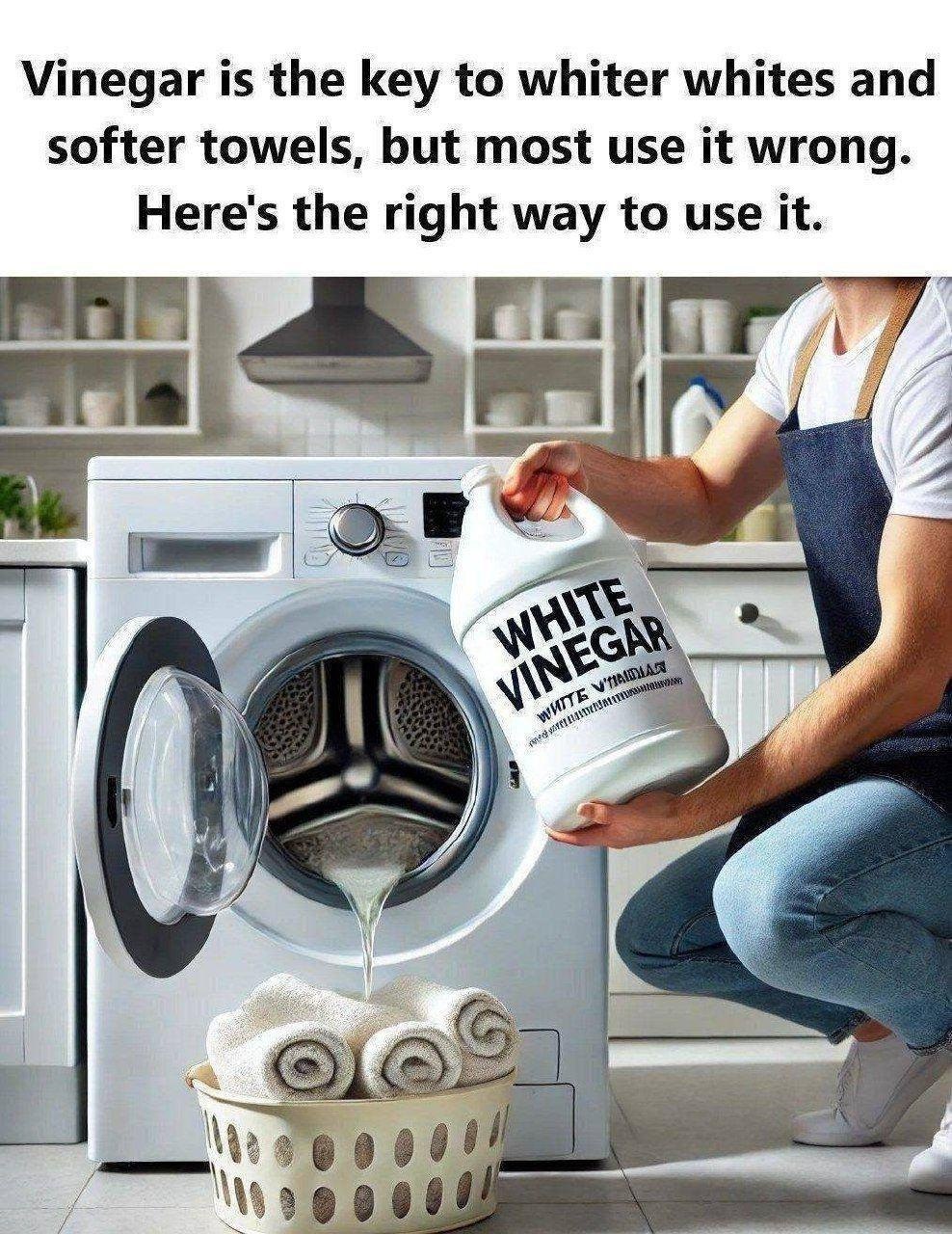
One of the best uses for vinegar in laundry is as a natural fabric softener. Many commercial fabric softeners are full of chemicals and fragrances that can irritate sensitive skin and even damage fabrics over time. Vinegar, on the other hand, is a gentle, eco-friendly alternative that softens clothes naturally.
How to use it: Add half a cup of white vinegar to the fabric softener compartment of your washing machine during the rinse cycle. This will help soften the fibers, reduce static, and leave your clothes feeling fluffy without the need for harsh chemicals.
- Why it works: Vinegar helps break down detergent residues that can build up on fabrics, making your towels, sheets, and clothing softer and more absorbent.
3. Brighten Your Whites and Remove Stains
If your whites are looking dull or yellowed, vinegar can help restore their brightness. It acts as a natural stain remover by helping to lift away dirt, oils, and residues from your clothing. Vinegar also neutralizes odors, leaving your laundry smelling fresh and clean.
How to use it: Add one cup of white vinegar directly into the wash water along with your detergent, especially when washing white clothing, towels, or sheets. If you have particularly stubborn stains, you can pre-soak your items in a vinegar solution before washing them.
- Why it works: The acidity of vinegar breaks down mineral deposits, dirt, and grime that can cause whites to become dingy, bringing back their brightness.
4. Combat Mildew and Musty Smells
Have you ever pulled a towel or shirt out of the laundry and noticed a musty odor? This is a common issue, especially with towels that are left in the washing machine too long. Vinegar is excellent at neutralizing these unpleasant odors and fighting mildew.
How to use it: If your towels or clothes smell musty, add a cup of white vinegar to the wash along with your regular detergent. If the odor persists, you can repeat the cycle or pre-soak the affected items in a mixture of water and vinegar before washing.
- Why it works: Vinegar helps eliminate mildew and mold by creating an acidic environment that inhibits fungal growth, and it neutralizes lingering odors.
5. Prevent Detergent Buildup
Over time, detergent and fabric softener residues can build up in your washing machine and on your clothes, making them feel stiff or less absorbent. Vinegar can help break down these residues, preventing the buildup that can reduce the effectiveness of your detergent.
How to use it: Add one cup of vinegar to your washing machine during a rinse cycle without any laundry in it. This will help clean the machine and remove any detergent buildup from the drum, pipes, and hoses.
- Why it works: Vinegar’s acidity helps dissolve detergent and mineral buildup in the washing machine, ensuring that your clothes come out cleaner and softer.
6. Use Vinegar to Clean Your Washing Machine
Your washing machine itself can become a breeding ground for mildew, soap scum, and bacteria. If you notice a musty smell when you open the washer door, it’s time to give the machine a deep clean. Vinegar is perfect for this task.
How to use it: To clean your washing machine, run a hot wash cycle with no clothes inside. Add two cups of white vinegar directly into the drum and let the machine run through a full cycle. This will help sanitize the drum and pipes, leaving your machine fresh and free of odors.
- Why it works: Vinegar is a natural disinfectant that can kill bacteria, mildew, and mold in your washing machine, ensuring that your laundry stays fresh and clean.
7. Use Vinegar to Keep Towels Fluffy
If your towels have become stiff and rough after multiple washes, vinegar can help restore their softness and fluffiness. As towels become worn, detergent buildup and mineral deposits from hard water can cause fibers to stiffen and lose their absorbency.
How to use it: Add half a cup to a full cup of white vinegar during the rinse cycle when washing your towels. The vinegar will remove the buildup and leave them soft and fluffy.
- Why it works: Vinegar removes detergent residue and mineral deposits, which allows the towel fibers to relax and regain their soft, fluffy texture.
8. How Much Vinegar Should You Use?
The amount of vinegar to use in your laundry depends on the load size and the type of laundry you’re washing. For general use, adding 1/2 cup of vinegar to the rinse cycle is usually sufficient. For heavy-duty cleaning, such as when dealing with stubborn stains or musty odors, you can use up to 1 cup of vinegar.
- For regular loads: 1/2 cup of vinegar in the rinse cycle.
- For heavy-duty cleaning: 1 cup of vinegar in the wash cycle.
- For cleaning the washing machine: 2 cups of vinegar in a hot cycle with no laundry.
Conclusion
Vinegar is an inexpensive, eco-friendly alternative to commercial laundry products that can help make your laundry routine more effective and healthier. By using vinegar the right way, you can achieve whiter whites, softer towels, and fresher laundry without relying on harsh chemicals. Whether you’re looking to soften your clothes, brighten your whites, or eliminate odors, vinegar is your go-to solution. So next time you’re doing laundry, don’t forget to add a little vinegar—it’s the secret ingredient to a better wash!
FAQ
1. Can I use vinegar on all types of fabrics?
Yes, vinegar is safe for most fabrics, including cotton, linen, and synthetic fibers. However, it’s always a good idea to check the care instructions on your clothes before using vinegar, especially if you have delicate fabrics like silk or wool.
2. Can vinegar damage my washing machine?
No, vinegar will not damage your washing machine when used in appropriate amounts. In fact, it can help clean and maintain your machine by breaking down mineral
