
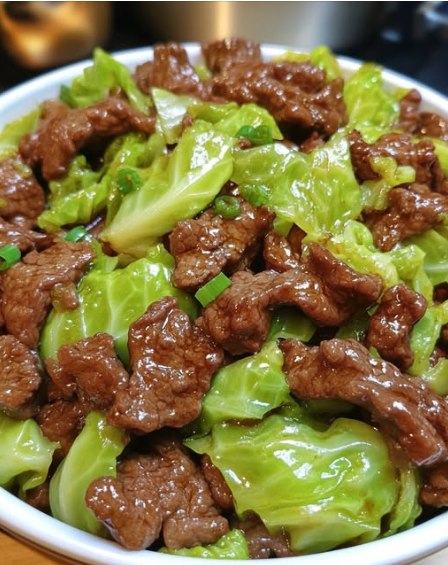
The cooking process for this dish follows a clear and logical order. Each step is governed by timing and heat
management, ensuring that all components reach their optimal state without compromising one another.
Begin by placing a large skillet over medium-high heat. Allow the pan to preheat thoroughly before adding any
ingredients. This regulation is critical: a properly heated pan promotes browning rather than steaming,
especially for the beef.
Add one tablespoon of butter to the skillet. Once melted and lightly foaming, arrange the sliced beef in a
single layer. Avoid overcrowding the pan, as this traps moisture and prevents proper searing. Cook the beef
briefly, turning once, until browned on the outside but still tender inside. Remove the beef from the pan and
set it aside. This step protects the meat from overcooking while allowing the pan to retain its flavorful
residue.
Reduce the heat to medium and add the remaining butter. As it melts, introduce the shredded cabbage, spreading
it evenly across the skillet. The key regulation here is restraint: allow the cabbage to sit undisturbed for
short intervals. This contact with the hot surface encourages caramelization, drawing out natural sugars and
developing a golden color.
After several minutes, stir the cabbage gently and continue cooking until softened and lightly browned. Add the
minced garlic during the final stage of cabbage cooking. Garlic should be stirred constantly and cooked briefly,
just until fragrant. This timing prevents burning and preserves its aromatic qualities.
Return the beef to the skillet, combining it with the cabbage and garlic. Toss gently to distribute flavors and
heat evenly. Finish the dish with freshly chopped herbs, stirring just enough to incorporate them without
diminishing their freshness.
Remove the skillet from heat and allow the dish to rest for a minute before serving. This brief pause allows
juices to redistribute and flavors to stabilize.
Serving and Storage:
Serving regulations for this dish emphasize immediacy and simplicity. One-Pan Garlic Butter Beef with
Caramelized Cabbage is best enjoyed hot, straight from the skillet. Serving it promptly preserves the contrast
between tender beef and lightly crisped cabbage.
This dish works well as a standalone meal or paired with simple accompaniments such as rice, potatoes, or crusty
bread. Any side should be neutral enough to complement rather than compete with the buttery, garlicky profile.
For storage, allow leftovers to cool completely before transferring them to an airtight container. Refrigerated,
the dish remains safe for up to three days. When reheating, use moderate heat to avoid overcooking the beef and
softening the cabbage excessively.
Freezing is possible but not ideal due to texture changes in cabbage. If freezing is necessary, portion the dish
and reheat gently, understanding that the cabbage may lose some of its caramelized quality.
Tips:
One of the most important tips is to slice the beef evenly and against the grain. This single action dramatically
improves tenderness and eating quality.
Another key recommendation is to control moisture. Pat the beef dry before cooking and avoid adding salt too
early, as excess moisture interferes with browning.
Do not rush the cabbage. Caramelization takes time, and frequent stirring prevents proper browning. Trust the
process and allow the cabbage to develop color naturally.
Finally, treat herbs with respect. Add them at the end and avoid excessive heat, which can dull their flavor and
aroma.
Conclusion:
One-Pan Garlic Butter Beef with Caramelized Cabbage & Herbs demonstrates how disciplined cooking regulations can
produce impressive results with minimal ingredients. By respecting sequencing, temperature, and ingredient
behavior, you achieve a dish that is both efficient and refined.
The strength of this recipe lies in its balance. Rich butter is offset by fresh herbs, savory beef is complemented
by sweet caramelized cabbage, and simplicity is elevated by technique. These elements work together because the
regulations governing them are followed with intention.
This dish serves as a reminder that good cooking does not require complexity, only understanding. When you apply
these principles consistently, even the simplest meals become memorable.
FAQ:
Can I use a different cut of beef?
Yes, but choose a cut suitable for quick cooking, such as flank or strip steak, and slice it thinly.
How do I prevent garlic from burning?
Add garlic toward the end of cooking and keep the heat moderate, stirring constantly.
Can I substitute cabbage with another vegetable?
Yes, vegetables like kale or Brussels sprouts work, but cooking times and textures will differ.
Is this dish suitable for meal prep?
It can be prepared in advance, though it is best enjoyed fresh for optimal texture.
What herbs work best?
Thyme and parsley are ideal, but other mild herbs can be used sparingly.
