
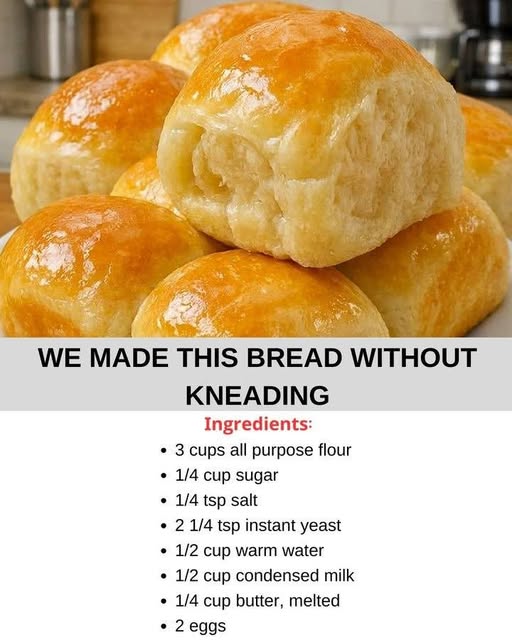
This recipe is designed to be easy and approachable, with minimal hands-on time.
- In a large bowl, combine the warm water, sugar, and instant yeast. Stir lightly and let the mixture sit
for about 5–10 minutes until foamy. This step confirms that the yeast is active. - Add the condensed milk, melted butter, and eggs to the yeast mixture. Whisk until well combined.
- Add the flour and salt to the bowl. Using a spoon or spatula, mix everything together until a sticky dough forms.
This should take about 2 minutes. Do not knead. - Cover the bowl with plastic wrap or a clean kitchen towel. Let the dough rest in a warm place for 1–1.5 hours,
or until it has doubled in size. - Once risen, gently stir the dough to release excess air. Transfer it into a greased loaf pan.
- Cover and let the dough rise again for 30–40 minutes, until puffy and just above the rim of the pan.
- Preheat the oven to 350°F (175°C). Bake the bread for 30–35 minutes, or until the top is golden brown
and the loaf sounds hollow when tapped. - Remove from the oven and allow the bread to cool slightly before slicing. Brush with butter if desired.
Serving and Storage
This condensed milk bread is best enjoyed warm, when the crumb is at its softest and most aromatic.
It pairs beautifully with butter, jam, honey, or even savory spreads.
For storage, allow the bread to cool completely, then wrap it tightly in plastic wrap or store it in an airtight container.
It will stay soft at room temperature for up to 2 days.
To store longer, refrigerate for up to 5 days or freeze slices for up to 2 months. Reheat gently to restore softness.
Tips:
- Make sure the water is warm, not hot, to avoid killing the yeast.
- Do not overmix; a sticky dough is normal for no-knead bread.
- Let the dough rise fully for the fluffiest texture.
- Use room-temperature eggs for easier mixing.
- Cover the bread loosely while cooling to retain moisture.
- For extra richness, brush the loaf with melted butter after baking.
Conclusion:
This no-knead condensed milk bread proves that homemade bread doesn’t have to be complicated.
With just a few minutes of mixing and a little patience, you can achieve a loaf that is incredibly soft, fluffy,
and full of comforting flavor.
Whether you are baking for your family, preparing breakfast, or simply enjoying the process of homemade bread,
this recipe delivers reliable results with minimal effort. Once you try it, it’s likely to become a regular favorite.
FAQ:
Why is this bread so soft?
The condensed milk, butter, and eggs create a rich dough that stays moist and tender after baking.
Can I use active dry yeast instead of instant yeast?
Yes, but you may need to let it bloom slightly longer in the warm water before mixing.
Do I really not need to knead the dough?
Correct. The long resting time allows gluten to develop naturally without kneading.
Can I make this bread sweeter?
You can add an extra tablespoon or two of sugar if you prefer a sweeter loaf.
What if I don’t have condensed milk?
Condensed milk is key to this recipe’s texture and flavor, so substitutions will change the result.
