
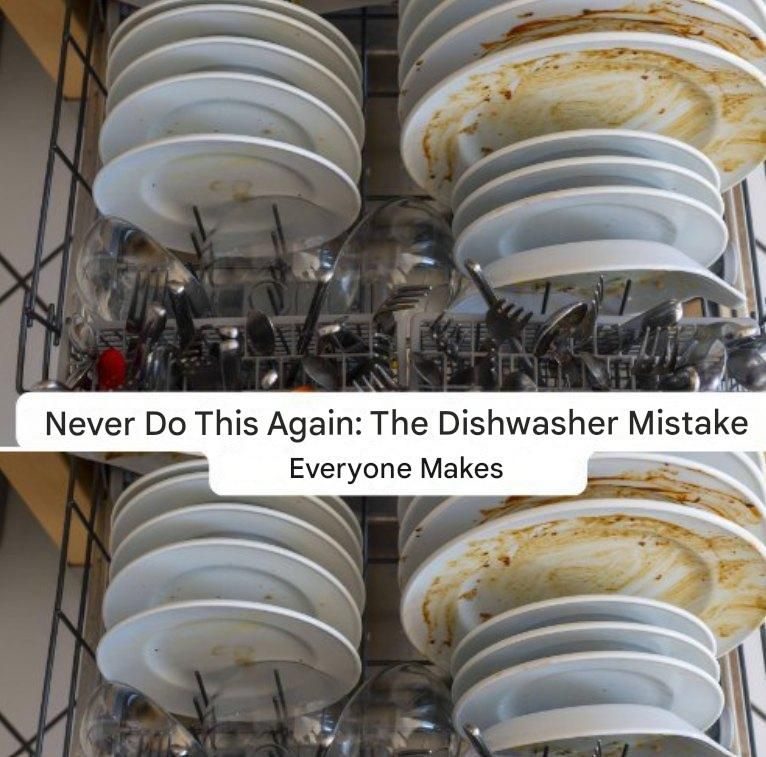
There are several reasons experts recommend skipping the pre-rinse:
- Detergent Needs Something to Grip. Most dishwasher detergents are formulated to attach to food residues. Without them, they can’t activate properly.
- You Waste Water. Pre-rinsing can use up to 20–30 gallons of water—far more than a full dishwasher cycle.
- Cycles Adjust Incorrectly. Modern machines rely on sensors to detect how dirty the load is. Over-clean dishes confuse them.
- You Wear Out Your Dishwasher. Extra cycles and longer wash times strain components over the years.
What You SHOULD Do Instead
The goal is not to load dishes with big chunks of food—but you also shouldn’t scrub them until they look clean. Here’s the ideal approach:
- Scrape off large bits of food into the trash or compost.
- Do not rinse or scrub. Just remove visible scraps.
- Load dishes properly to avoid blocking spray arms.
- Use the right detergent—pods or powders designed for high-efficiency machines.
- Run the machine when full for maximum efficiency.
Other Common Dishwasher Mistakes to Avoid
1. Overloading the Racks
Crowding the dishwasher prevents water jets from reaching every surface. Give dishes space—especially bowls and cups.
2. Blocking the Spray Arms
Large pans or cutting boards placed in the wrong position can stop the spray arms from rotating properly.
3. Using Too Much Detergent
More soap doesn’t mean cleaner dishes. Excess detergent leaves a filmy residue and may damage glassware.
4. Running a Half-Empty Load
This wastes water and energy. Unless you have an “eco” or “half load” setting, wait until the dishwasher is full.
5. Ignoring the Filter
Most modern dishwashers have a removable filter at the bottom. If it’s never cleaned, residue builds up and causes bad odors or poor cleaning.
Tips for Perfect Dishwasher Performance
- Use hot water—run the kitchen tap for a few seconds before starting the dishwasher.
- Place cups and bowls on the top rack facing downward.
- Put larger items on the bottom rack facing the spray arms.
- Use rinse aid to avoid water spots.
- Deep-clean your dishwasher once a month with vinegar or dishwasher cleaner tablets.
The Benefits of Breaking This Habit
When you stop pre-rinsing and start loading dishes correctly, you’ll notice:
- Cleaner, shinier dishes
- Lower water and energy bills
- Longer dishwasher lifespan
- Less time spent at the sink
Conclusion
The biggest dishwasher mistake—pre-washing dishes—is one of the easiest to fix. By simply scraping instead of rinsing, you allow your
dishwasher to work the way it was engineered to.
It saves you time, reduces waste, improves hygiene, and keeps your appliance running smoothly.
Small adjustments today can make your home more efficient tomorrow—and your dishes cleaner than ever.
FAQ
1. Why do some people say pre-rinsing is still necessary?
Older dishwashers (20+ years old) sometimes lacked soil sensors. Modern models are designed specifically not to need rinsing.
2. Should I use hot or cold water?
Dishwashers work best with hot water, ideally around 120°F (49°C).
3. Can I put non-stick pans in the dishwasher?
It’s not recommended. Hand-washing preserves their coating.
4. Why do my glasses look cloudy?
You may have hard water or be using too much detergent. Rinse aid can help.
5. How often should I clean the dishwasher filter?
Once a month is ideal, or more if you cook frequently.
