
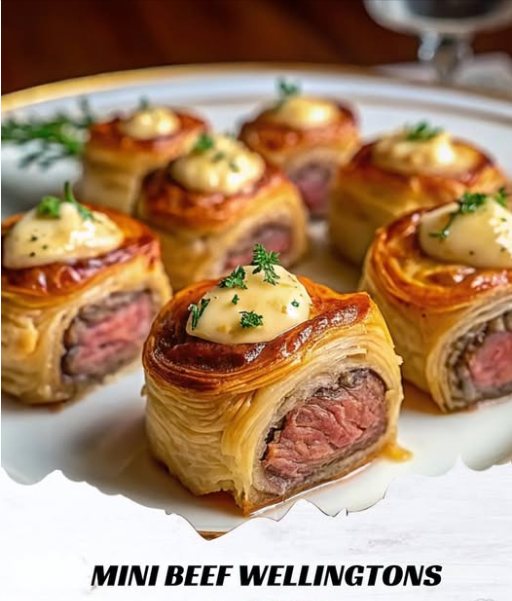
Mini Beef Wellingtons are assembled in stages. Skipping or reordering steps disrupts structural balance and
compromises the final result.
Begin by preheating the oven to 400°F (200°C). Line a baking sheet with parchment paper to prevent sticking and
ensure even heat transfer.
Cut the beef tenderloin into four equal portions. Season lightly if desired, then sear each piece briefly in a
hot pan until browned on all sides. This step develops surface flavor while leaving the interior rare. Remove
from heat and allow the beef to cool completely.
Cooling is mandatory. Wrapping warm beef will melt the pastry’s butter layers prematurely, preventing proper
puffing during baking.
Lay out the puff pastry sheets on a lightly floured surface. Place a small spoonful of mushroom duxelles in the
center of each sheet and spread it slightly, forming a base layer.
Place one cooled beef portion on top of the duxelles. Brush the edges of the pastry lightly with beaten egg.
Fold the pastry around the beef, sealing tightly and trimming excess if necessary. The seal must be complete to
prevent leakage.
Transfer the wrapped Wellingtons seam-side down onto the prepared baking sheet. Brush the tops evenly with egg
wash to encourage uniform browning.
Bake for 15–20 minutes, or until the pastry is puffed and deeply golden. Internal doneness will vary slightly by
oven and thickness, but the goal is medium-rare to medium beef.
Remove from the oven and allow the Wellingtons to rest for 5 minutes before serving. This resting period allows
juices to redistribute and pastry structure to stabilize.
Serving and Storage:
Mini Beef Wellingtons should be served immediately after resting. The contrast between crisp pastry and tender
beef is at its peak when fresh from the oven.
Serve as individual portions, ideally with simple sides that do not introduce excess moisture. Clean slicing
reveals the layered interior and confirms proper execution.
Leftovers may be refrigerated for up to two days, though pastry quality will diminish. Reheat in the oven rather
than the microwave to restore some crispness.
Tips:
Ensure duxelles are fully dry before assembly. Moisture is the primary enemy of puff pastry.
Do not skip the cooling step after searing the beef. Heat control is essential for pastry lift.
Seal seams thoroughly. Even small gaps can lead to leakage and soggy bottoms.
Avoid overfilling. Excess filling disrupts wrapping and compromises structure.
Conclusion:
Mini Beef Wellingtons succeed through precision rather than abundance. Each layer performs a specific function,
and the regulations governing temperature, moisture, and assembly ensure harmony.
This dish demonstrates how discipline elevates simple ingredients into refined results. When executed correctly,
the Wellington becomes a compact system of crispness, tenderness, and restraint.
By respecting structure and sequence, Mini Beef Wellingtons deliver consistency, elegance, and satisfaction in
every portion.
FAQ:
Can I prepare these ahead of time?
Yes, they can be assembled and refrigerated briefly before baking.
Why must the beef be seared first?
Searing develops flavor and reduces surface moisture.
How do I prevent soggy pastry?
Ensure duxelles are dry and beef is fully cooled.
Can I freeze them?
They may be frozen unbaked, though baking time will increase.
Why rest before serving?
Resting stabilizes juices and pastry structure.
