
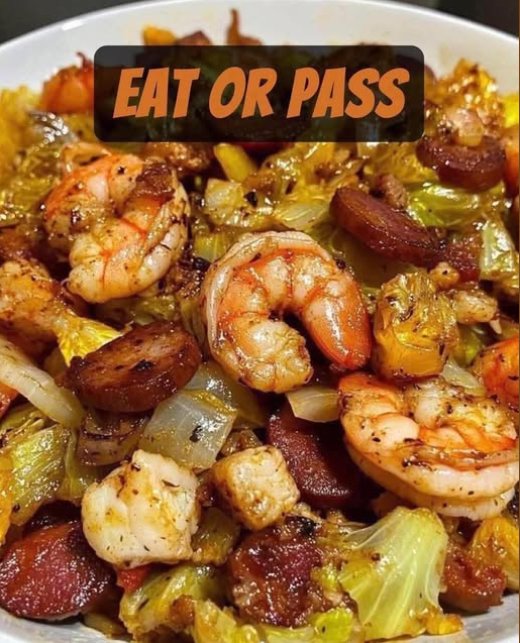
Cooking Fried Cabbage with Shrimp, Sausage & Beef requires attention to order. Each ingredient is added according
to how it responds to heat, ensuring that textures remain distinct while flavors blend naturally.
Begin by heating a large skillet over medium heat. Add the oil and allow it to heat evenly across the surface.
This initial regulation—proper pan preheating—ensures that ingredients sauté rather than steam.
Add the sliced sausage to the skillet first. Because sausage contains fat and seasoning, it benefits from early
contact with heat. Allow it to cook undisturbed for a short time so it can brown and release flavorful oils.
Stir occasionally until the sausage develops a lightly crisp exterior.
Next, add the cooked diced beef. Since the beef is already cooked, the regulation here is gentle reheating rather
than aggressive cooking. Toss it with the sausage just long enough to warm through and absorb some of the
rendered fat.
Add the minced garlic and stir continuously for a brief moment. Garlic should cook only until fragrant. This
stage is highly regulated, as burned garlic introduces bitterness that can overpower the dish.
Introduce the shredded cabbage to the skillet, spreading it evenly. Increase the heat slightly if needed and
allow the cabbage to sit without stirring for short intervals. This encourages light caramelization and prevents
excess moisture from accumulating.
After several minutes, stir the cabbage and continue cooking until it softens but retains some structure. The
goal is tender cabbage with lightly browned edges, not fully collapsed leaves.
Finally, add the cooked shrimp. Because shrimp is delicate, it should be added last and tossed gently. Cook only
until the shrimp is heated through, ensuring it remains tender and juicy.
Remove the skillet from heat and allow the dish to rest briefly. This pause allows flavors to settle and ensures
even heat distribution before serving.
Serving and Storage:
Serving this dish follows practical and sensory regulations. Fried Cabbage with Shrimp, Sausage & Beef is best
served hot, directly from the skillet. Heat preserves aroma, texture, and flavor balance.
Serve the dish in shallow bowls or plates to showcase the variety of ingredients. It can stand alone as a full
meal or be paired with simple sides such as rice, bread, or potatoes that do not compete with its savory
profile.
For storage, allow leftovers to cool completely before transferring them to airtight containers. Refrigerated,
the dish remains safe for up to three days. Because it contains multiple proteins, gentle reheating is essential
to maintain texture.
Reheat over medium-low heat, stirring occasionally. Microwaving is possible but should be done in short
intervals to avoid overcooking the shrimp.
Tips:
One key tip is to control moisture. Excess water from cabbage can prevent browning, so avoid overcrowding the
pan and do not cover it during cooking.
Respect protein timing. Shrimp should always be added last, while sausage benefits from early browning. This
simple rule preserves texture and flavor.
Use a large skillet. Adequate surface area allows proper sautéing and prevents steaming.
Finally, taste near the end rather than early. Sausage often provides enough seasoning on its own, reducing the
need for additional salt.
Conclusion:
Fried Cabbage with Shrimp, Sausage & Beef demonstrates how clear cooking regulations bring order to complexity.
By understanding how each ingredient behaves under heat, you can prepare a dish that feels cohesive rather than
crowded.
This meal succeeds because it balances richness with restraint. Multiple proteins are unified by cabbage and
garlic, while careful sequencing ensures none are overcooked. The result is a skillet dish that feels intentional
and satisfying.
In a single pan, this recipe brings together contrast, comfort, and practicality. When the regulations outlined
here are followed, the dish becomes not just easy, but reliably excellent.
FAQ:
Can I use raw shrimp instead of cooked?
Yes, but add it slightly earlier and cook just until opaque.
What type of sausage works best?
Smoked or fully cooked sausages provide the most flavor and hold their texture well.
Can I substitute another vegetable for cabbage?
Yes, but cooking times and moisture levels will vary.
Is this dish suitable for meal prep?
It can be prepared ahead, though shrimp texture is best when freshly cooked.
Do I need to add extra seasoning?
Often no, as sausage and beef provide sufficient seasoning on their own.
